
 EN

Sourcing Perspective on Cooktop Reliability and Glass Failure Risks
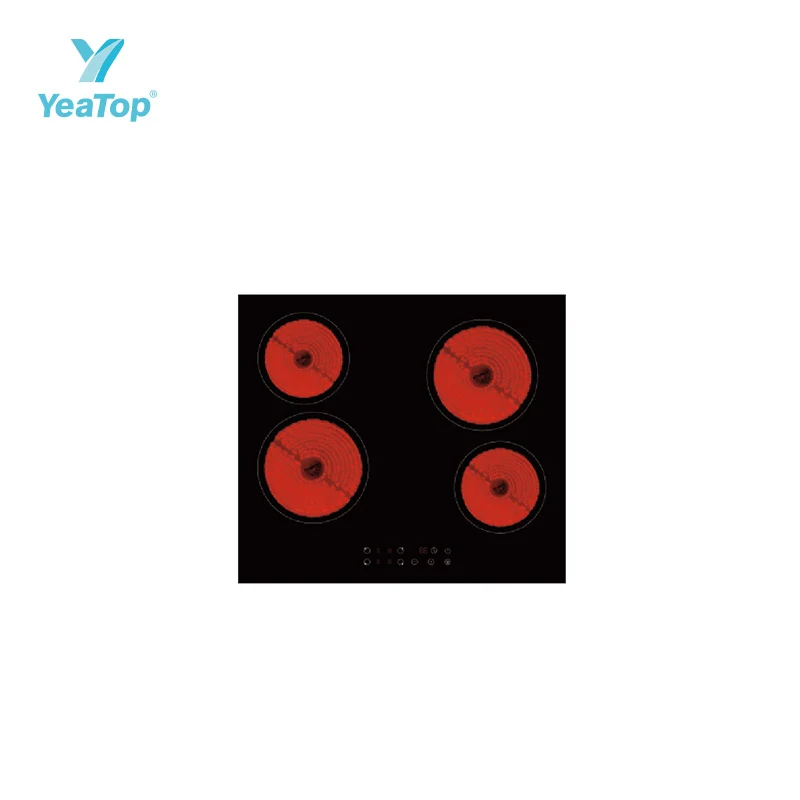
In high-volume kitchen appliance distribution, after-sales warranty claims dictate commercial profitability and long-term brand survival. Over years of managing household retail appliance portfolios across competitive global markets, procurement directors routinely encounter one recurring nightmare: fractured glass cooktops. When an end user suffers a cracked cooktop surface, the commercial damage extends far beyond replacing a defective unit. It triggers immediate product safety complaints, costly logistics recalls, and irreversible erosion of brand reputation. A modern electric ceramic cooker relies on its glass panel as both the mechanical weight-bearing platform and the direct thermal transmission interface. Unlike electromagnetic induction cooktops that generate inductive energy within cookware, an infrared ceramic cooker utilizes radiant resistance heating coils mounted directly beneath the microcrystalline glass panel. During high-temperature searing or sustained boiling, operating temperatures right below the plate routinely surge beyond 650 degrees Celsius. When an overseas brand partners with an appliance supplier that cuts corners on panel specifications or chassis assembly tolerances, severe thermal expansion differences and micro-fissures trigger sudden surface fragmentation. Conducting thorough, on-site manufacturing audits focused specifically on glass resistance protocols remains the only dependable strategy for procurement teams to mitigate commercial liability and guarantee consumer safety.
Raw Material Selection and Low Thermal Expansion Substrates
During technical factory evaluations, the quality assessment must always begin in the raw material staging warehouse, because superior thermal resistance cannot be applied as a cosmetic aftermarket coating. In any high-performance ceramic cooker, structural durability is governed entirely by the purity and molecular composition of the lithium aluminosilicate glass substrate. Premium manufacturing facilities partner with certified glass suppliers to source specialized microcrystalline panels engineered with a near-zero thermal expansion coefficient, held within an ultra-tight engineering tolerance of zero plus or minus 0.15 multiplied by ten to the negative sixth per Kelvin between 20 and 700 degrees Celsius. Standard tempered soda-lime glass expands unevenly when subjected to concentrated heat, rapidly fracturing under thermal gradient stresses. In contrast, specialized lithium aluminosilicate substrates accommodate extreme thermal swings without dimensional distortion or internal molecular dislocation. The substrate thickness is tightly calibrated to 4.0 millimeters with a variance of no more than 0.15 millimeters, ensuring an optimal balance between structural load capacity and thermal responsiveness. Optical infrared transmittance must maintain at least 85 percent across the radiant heat spectrum so the ceramic cooker delivers maximum heating efficiency without trapping radiant energy beneath the plate. Quality inspectors at Jiaye enforce stringent Inbound Quality Control measures on every shipment, passing incoming blanks through polarized optical filters to verify zero internal gas bubbles or crystalline inclusions exceeding 0.1 millimeters. Rejecting defective blanks before fabrication prevents premature thermal failure across the lifetime of the ceramic cooker.
Thermal Shock Resistance Protocols and Cold Water Quench Testing
Daily kitchen environments present aggressive temperature differentials that challenge structural integrity. A home cook frequently leaves a heavy stockpot boiling at maximum wattage for extended periods, pushing surface temperatures past 600 degrees Celsius, and then accidentally splashes chilled water across the radiant zone. In a substandard ceramic cooker, localized temperature collapse induces severe tensile stresses across the glass, resulting in spiderweb fractures or sudden shattering. To guarantee real-world durability, production protocols require destructive thermal shock testing on randomly sampled units from every production batch. At the Jiaye testing facility, technicians mount finished ceramic cooker units into specialized thermal test enclosures. Technicians activate radiant burners at full capacity until surface temperature sensors and calibrated optical pyrometers verify steady-state heat saturation at 700 degrees Celsius for thirty continuous minutes. Once thermal saturation is confirmed across the active cooking zone, inspectors immediately discharge 250 milliliters of cold water at 15 degrees Celsius directly onto the red-hot glass. To achieve qualification, the ceramic cooker must show zero hairline fissures, zero chipping, and no surface spalling. Furthermore, test engineers repeat this quench cycle across ten consecutive runs on the same sample, followed by a 3,750-volt dielectric withstand test to confirm that electrical insulation remains completely intact with leakage current below 0.25 milliamperes. Experiencing these aggressive quench cycles without structural degradation proves that the ceramic cooker can easily withstand the most demanding culinary mishaps.
Mechanical Durability Assessment Through Steel Ball Drop Testing
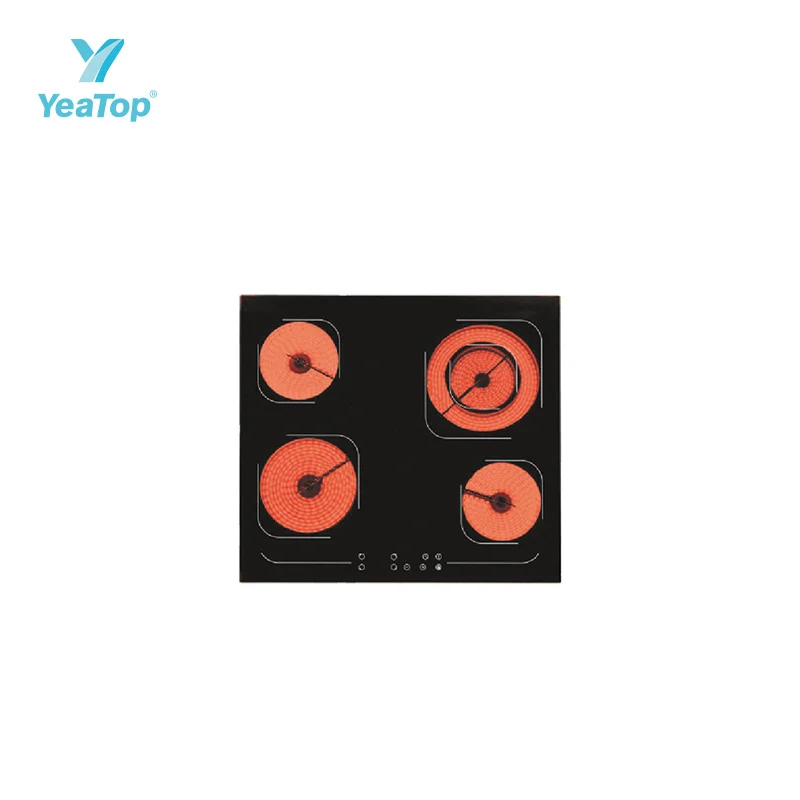
Thermal endurance is only half of the structural equation; daily kitchen operations demand robust mechanical impact defense. Cast-iron skillets slip from wet fingers, heavy metal ladles tumble from overhead storage racks, and loaded casserole dishes are dropped abruptly onto the cooking surface. International electrical safety directives, specifically IEC 60335-2-6, mandate strict mechanical impact compliance thresholds for every consumer ceramic cooker. During factory quality audits, the calibrated steel ball drop test serves as the defining verification standard for physical resilience. Quality engineers secure the ceramic cooker onto a rigid, vibration-damped granite mounting bench. A solid hardened steel sphere weighing exactly 535 grams with a diameter of 50 millimeters is mounted into an electromagnetic release mechanism positioned 500 millimeters above the cooktop surface. The steel ball drops vertically onto multiple stress coordinates, including the radiant center, perimeter borders, and the sensitive capacitive touch sensor interface. A passing ceramic cooker must demonstrate zero structural cracking, chipping, or internal spidering. Supplementary mechanical testing includes a spring-loaded impact hammer delivering 0.5 Joules of kinetic energy to verify edge chip resistance, alongside a continuous static load trial applying 25 kilograms of dead weight for 24 hours, where glass deflection must remain strictly beneath 0.3 millimeters with complete physical recovery once unloaded. Scratch resistance is verified using 2,500 abrasive passes with metal-laden pads, confirming a surface hardness of at least 6.5 on the Mohs scale. By pairing resilient glass with internal silicone damping buffers and a reinforced chassis, the ceramic cooker absorbs impact energy effectively without shattering.
Edge Processing Engineering and Defect Detection Standards
Advanced materials science demonstrates that structural glass failure rarely starts in the center of a cooktop; it almost invariably initiates along edge boundaries where micro-fissures develop during cutting. When large glass mother-sheets are sectioned into individual cooktop blanks, the cutting process leaves microscopic serrations and subsurface shear stresses along the perimeter. Under repeated heating and cooling cycles within a ceramic cooker, these micro-cracks gradually propagate inward until the panel fractures under minimal external force. Eliminating this vulnerability demands precision edge fabrication. High-end appliance manufacturers deploy automated multi-axis Computer Numerical Control grinding centers fitted with diamond-impregnated profiling tools. Every ceramic cooker glass blank undergoes CNC-controlled C-profile edge grinding and smooth corner chamfering. This rounding treatment transforms sharp, notch-sensitive edges into uniform stress-relieving contours that deflect lateral impacts from cookware. Following automated CNC edge finishing, high-resolution optical inspection cameras scan the perimeter under polarized illumination to verify that no edge chipping exceeds 0.05 millimeters. Any glass plate displaying minute chips is rejected before reaching the main ceramic cooker assembly lines.
Waterproof Chassis Sealing and Spill Containment Protocols
A crack-resistant glass panel cannot protect an electric ceramic cooker if boiling liquids penetrate the underlying housing. Boilovers of salted soups, stews, and hot oil occur regularly during residential and commercial cooking. If conductive liquid enters the appliance enclosure, it quickly reaches internal high-voltage terminal boards, radiant heating coils, and electronic microprocessor circuitry, triggering short circuits, component burnout, and dangerous leakage currents. To construct an impenetrable barrier, Jiaye utilizes multi-axis robotic dispensing systems that apply a continuous, unbroken bead of high-temperature Room Temperature Vulcanizing silicone sealant around the perimeter mating flange. Robotically controlled deposition guarantees a uniform bead thickness of 1.8 millimeters without gaps or uneven thinning. The applied sealant withstands sustained operating temperatures up to 200 degrees Celsius without embrittlement or shrinkage. Production samples of each built-in ceramic cooker model undergo severe overflow testing, where five liters of boiling saline solution are poured over the operating cooking zone and capacitive control panel. Technicians subsequently perform high-potential insulation resistance tests at 3,750 volts, confirming zero electrical breakdown and zero leakage current exceeding 0.25 milliamperes, ensuring that the ceramic cooker remains completely safe throughout real-world kitchen boilovers.
Supplier Evaluation Verdict and Manufacturing Capabilities of Jiaye
For global retail brand owners, commercial kitchen importers, and private-label distributors, auditing factory quality protocols is the definitive measure that protects brand reputation and profitability. Sourcing an ultra-reliable ceramic cooker demands an OEM and ODM manufacturing partner that treats glass engineering as a rigorous scientific discipline rather than a superficial sales claim. With eleven years of specialized manufacturing experience, a catalog spanning over 10,000 appliance specifications, and 28 international safety certifications including CE, CB, GS, RoHS, and EMC, Zhongshan Jiaye Electrical Appliances Tech Co., Ltd. demonstrates comprehensive manufacturing capability. Within their modern assembly workshops, Jiaye combines precision CNC glass processing, robotic adhesive sealing, and exhaustive batch testing to maintain an exceptional production defect rate below 0.15 percent. Whether international buyers require complete private-label ceramic cooker solutions in retail packaging or Semi-Knocked-Down and Completely-Knocked-Down kits for tariff-optimized local assembly, Jiaye delivers verifiable quality, rapid design turnaround, and reliable supply chain security for competitive cooking appliance markets worldwide.
Table of Contents
- Sourcing Perspective on Cooktop Reliability and Glass Failure Risks
- Raw Material Selection and Low Thermal Expansion Substrates
- Thermal Shock Resistance Protocols and Cold Water Quench Testing
- Mechanical Durability Assessment Through Steel Ball Drop Testing
- Edge Processing Engineering and Defect Detection Standards
- Waterproof Chassis Sealing and Spill Containment Protocols
- Supplier Evaluation Verdict and Manufacturing Capabilities of Jiaye