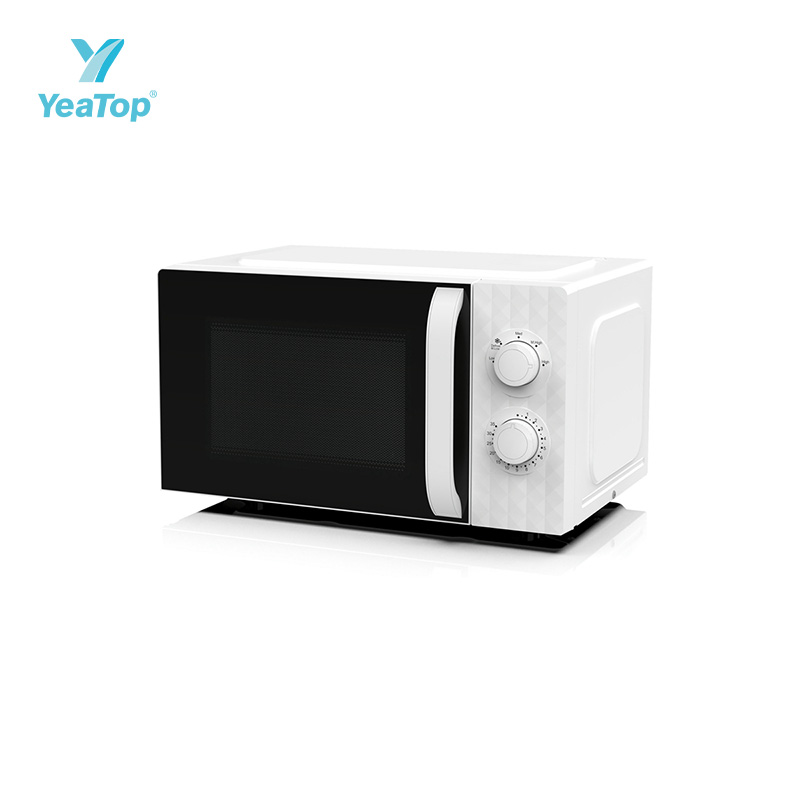
How Inverter Technology Enhances Microwave Defrosting?
When home cooks and professional chefs prepare frozen meats, poultry, or seafood, achieving a perfectly thawed ingredient without cooking the outer edges remains a persistent culinary challenge. For decades, traditional cooking appliances struggled to deliver gentle, even defrosting cycles, often leaving food with partially cooked rims and frozen centers. Sourcing or developing a high-performance microwave oven equipped with advanced inverter technology completely transforms this everyday kitchen experience. Unlike older transformer-based heating systems that rely on harsh on-and-off power pulsing, modern inverter systems provide a steady, continuous stream of low-level microwave energy. Evaluating how this technology revolutionizes food thawing helps commercial buyers, distributors, and appliance brands understand why inverter cooking appliances dominate contemporary retail markets.
The Thermal Limitations of Traditional Duty-Cycle Defrosting
To appreciate the engineering breakthrough of variable power control, one must examine why older appliance designs fail during standard defrost cycles. A traditional conventional microwave oven operates on a fixed-power magnetron tube that cannot actually reduce its output intensity. When a user selects a lower power setting, such as thirty percent power for defrosting, the internal transformer simply switches the magnetron completely on for a few seconds, then completely off for the next few seconds. This crude duty-cycle pulsing floods the frozen food with full-power bursts of thermal energy during active intervals, followed by passive resting phases. As a result, moisture on the outer edges of the meat absorbs the energy rapidly, heating up and beginning to cook while the dense core remains locked in ice.
Linear Continuous Power Output of Inverter Systems
Inverter technology eliminates the flaws of pulsed heating by replacing heavy magnetic transformers with sophisticated microprocessor-controlled inverter circuits. Inside an advanced inverter microwave oven, the electrical current is converted and modulated to deliver a smooth, uninterrupted stream of microwave energy at precisely calibrated power levels. Instead of alternating between full power and zero power, the magnetron emits a constant, gentle beam of energy throughout the entire defrost duration. This linear power output allows thermal waves to penetrate deep into the frozen core of the food at a controlled, uniform rate. Heat conduction balances naturally from the inside out, ensuring that delicate proteins thaw gently without premature edge boiling or hot-spot scorching.
Preserving Food Texture, Cell Integrity, and Nutritional Flavor
The culinary benefits of continuous linear power extend far beyond convenience, directly impacting food texture and moisture retention. When delicate proteins like fish fillets or steak are thawed in a modern microwave oven powered by inverter technology, cell walls experience minimal thermal shock. Traditional pulsed heating frequently bursts cellular membranes on the outer surface, causing valuable natural juices to leak out and leaving the meat dry and stringy after cooking. In contrast, gentle inverter defrosting maintains cellular integrity, locking in natural moisture, essential nutrients, and rich flavor profiles. Culinary tests consistently demonstrate that meats thawed via inverter systems retain a superior texture and fresher taste, closely mimicking naturally refrigerator-thawed ingredients in a fraction of the time.
Energy Efficiency, Spatial Optimization, and Cooking Speed
Beyond superior defrosting performance, inverter-equipped cooking appliances deliver significant advantages in overall energy efficiency and internal cavity utilization. Traditional transformers are exceptionally heavy, bulky, and generate considerable waste heat, which limits internal usable space and consumes extra electricity. By eliminating heavy iron core transformers, an energy efficient microwave oven becomes significantly lighter, more compact on the exterior, yet provides a larger usable interior cooking cavity. Furthermore, precise power regulation reduces electrical resistance losses, enabling faster overall cooking times and lower monthly utility consumption for end users. Retail distributors find that these advanced operational benefits appeal strongly to eco-conscious and tech-savvy consumers.
Rigorous Laboratory Quality Control and Durability Testing
Delivering flawless inverter performance to global retail markets requires rigorous engineering validation and strict factory quality assurance protocols. Premium manufacturing facilities subject every reliable microwave oven prototype to rigorous electrical stress tests, magnetron output stability checks, and thermal endurance trials. Quality control engineers monitor inverter circuit board responses under fluctuating voltage conditions to ensure faultless long-term operation. Comprehensive safety compliance testing guarantees that electromagnetic emissions remain strictly within international regulatory limits, protecting consumer health and satisfying regional certification requirements across diverse global markets.
Partnering with Jiaye Group for Advanced Appliance Manufacturing
Succeeding in the competitive global kitchen appliance industry requires partnering with an experienced manufacturer dedicated to technological innovation and uncompromising quality control. Jiaye Group stands out as a trusted OEM and ODM partner, delivering exceptional kitchen ventilation and cooking equipment to international brands and commercial distributors. Operating certified ISO quality management systems, Jiaye Group integrates advanced electronic circuit assembly, precision sheet metal fabrication, and comprehensive testing into every production line. Partnering with Jiaye Group provides global buyers with scalable manufacturing capacity, customized product development, and dependable supply chain support that drives enduring commercial success.

 EN