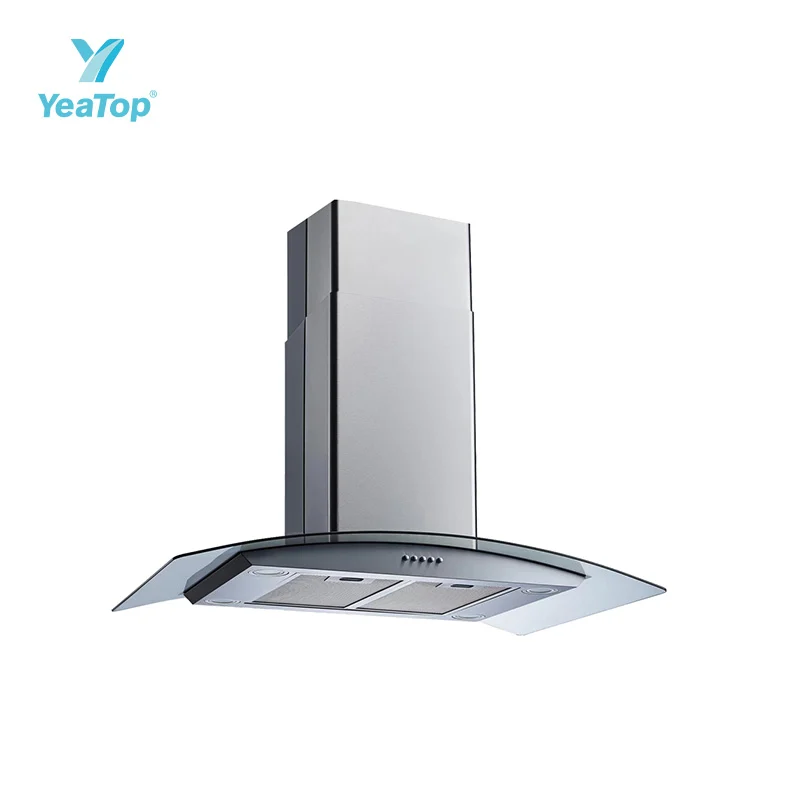
For global kitchen appliance importers, regional wholesale distributors, and commercial procurement managers, maritime freight expenses and container space utilization heavily influence net profit margins. Sourcing a high-performance range hood product lineup from overseas factories requires strategic logistical planning beyond unit manufacturing pricing. Because kitchen exhaust hoods typically feature hollow sheet metal canopies, extended glass collection visors, and bulky internal blower motor housings, standard factory packaging often results in excessive empty air space inside ocean shipping containers. When international logistics teams ship poorly nested appliance cartons, volumetric freight charges escalate rapidly, eroding commercial margins before products even reach destination warehouses. Implementing structured export container loading optimization strategies allows commercial buyers to double payload density, lower per-unit freight allocations, and streamline port customs clearance. In an era of volatile global shipping rates, maximizing spatial payload efficiency across every range hood shipment transforms routine logistics into a sustainable competitive advantage. Sourcing managers who analyze freight variables alongside unit prices unlock hidden margin potential that competitors often overlook. Collaborative logistics planning between brand owners and factory packaging engineers eliminates waste and strengthens long-term commercial relationships.
Identifying Physical Causes of Shipping Inefficiency in CBU Packaging
Understanding the physical causes of shipping inefficiency requires analyzing how traditional CBU packaging impacts shipping container volumetric yield. A standard residential range hood appliance incorporates a spacious stainless steel canopy, internal centrifugal fan assemblies, and delicate control electronics. When factories wrap complete units in oversized expanded polystyrene foam endcaps and thick corrugated master cartons without structural nesting, empty air chambers inside the internal chimney cavity remain completely unutilized. In a standard 40-foot High Cube ocean container, unoptimized packaging limits total payload capacity to roughly 350 or 400 assembled units before hitting volumetric capacity limits. Transporting a range hood in a bulky carton essentially means paying expensive ocean freight fees to ship empty air across international sea lanes. Furthermore, transit vibrations across multi-modal shipping lines can cause carton crushing if corner stacking strength is insufficient, leading to costly insurance claims and inventory stockouts. In addition, unoptimized packaging increases carton handling frequency, raising the risk of accidental drops during manual container unloading at port terminals. Overcoming these physical packaging limitations requires rethinking how individual sub-assemblies are nested together before master cartons are sealed.
Modular Packaging Re-Engineering and 3D Container Loading Software
To overcome these spatial limitations, leading appliance manufacturers utilize advanced 3D container loading software and modular packaging re-engineering. By adjusting master carton exterior dimensions by just a few millimeters, packaging engineers eliminate dead space across pallet dimensions and container wall clearances. For every customized range hood model, modular nesting designs allow separate chimney extension ducts, grease collection cups, and stainless steel baffle filters to nest neatly inside the main canopy void. Furthermore, replacing bulky foam inserts with high-density honeycomb paperboard and custom-molded plastic trays reduces overall carton footprint while increasing top-load compression resistance. Designing a compact range hood master carton ensures that every cubic meter of container volume is fully monetized, enabling 40-foot High Cube container loading yields to jump from 400 units to over 800 units per single shipment. Implementing structural carton nesting also reduces paperboard raw material usage, helping brands achieve corporate sustainability targets alongside logistics savings. Advanced software algorithms simulate thousands of palletizing permutations to discover optimal spatial stacking patterns for containers.
Real-World B2B Case Analysis: Doubling Payload Capacity and Slashing Freight
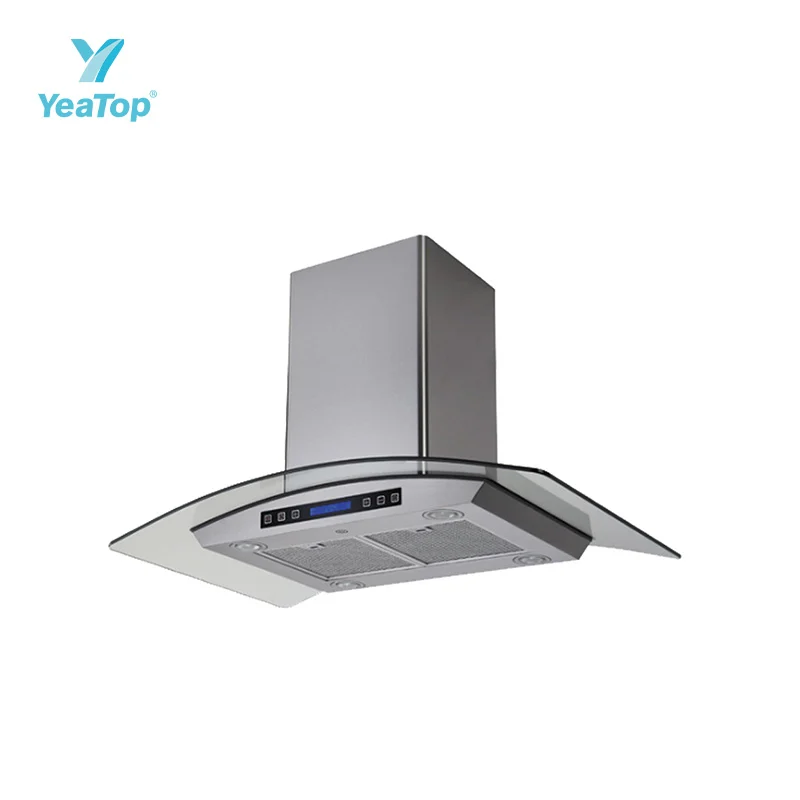
A practical B2B supply chain case study illustrates how container loading optimization directly translates into substantial ocean freight cost reductions. Consider a European kitchen appliance brand importing a popular 90cm T-shape range hood unit from an Asian manufacturing hub. Under unoptimized factory packaging, ocean freight for a 40-foot container costs 6,000 USD, dividing across 400 units to yield a freight cost of 15 USD per unit. By transitioning to a modular nested packaging arrangement engineered by the source supplier, the exact same container holds 800 units of the exact same range hood model. This 100 percent increase in container payload drops the per-unit freight allocation from 15 USD down to 7.50 USD, instantly saving 7.50 USD per unit on landed cost. For an importer ordering 10,000 units annually, optimized range hood packaging delivers 75,000 USD in direct freight savings, delivering immediate competitive price advantages in local retail markets. These landed cost reductions provide brand managers with the financial flexibility to offer aggressive promotional pricing or invest in local marketing campaigns without sacrificing gross margin. Multiplied across multiple annual shipping containers, container loading optimization generates game-changing savings for high-volume appliance brands.
Customs Tariff Advantages and Reduced Localized Warehousing Overhead
Optimizing shipping container payload density delivers secondary financial rewards by lowering import tariffs and reducing localized warehousing expenses. Customs import duties in many target markets are calculated based on CIF (Cost, Insurance, and Freight) valuation, meaning lower ocean freight expenses directly reduce total taxable import values. Additionally, flat-packed and dimensionally compressed range hood packaging occupies significantly less floor space inside regional distribution centers. Reduced storage footprints lower monthly warehouse holding costs, streamline forklift handling efficiency, and accelerate inventory turnover for commercial distributors managing multi-SKU product portfolios. Furthermore, a space-efficient range hood box design allows regional delivery trucks to carry more units per route, cutting domestic last-mile distribution costs. E-commerce distributors also benefit from reduced dimensional weight fees when shipping individual units via parcel carrier networks to end consumers. Streamlined carton dimensions also simplify inventory auditing and automated pallet racking within modern high-bay distribution warehouses.
Rigorous ISTA Packaging Transit Testing and Structural Compression Validation
Preventing transit damage during long maritime shipping routes requires rigorous structural testing and international packaging validation. Increasing container payload density must never compromise product protection during ocean transit, rail transfer, or last-mile trucking. Certified manufacturing facilities subject every optimized range hood shipment configuration to ISTA (International Safe Transit Association) packaging drop tests, incline impact trials, and multi-axis vibration testing. Stacking strength calculations verify that bottom-tier master cartons withstand thousands of kilograms of vertical compression force inside a fully loaded container without buckling. Ensuring that each range hood box maintains structural rigidity prevents corner denting and glass breakage, guaranteeing that every unit arrives at destination warehouses in pristine, shelf-ready condition. Lab technicians verify that internal protective inserts absorb mechanical shock effectively, ensuring that sensitive glass control panels and electronic displays remain fully protected. Comprehensive quality documentation and drop test reports give insurance underwriters and buyers total peace of mind during multi-modal transit.
Partnering with Jiaye Group for Optimized Supply Chain Performance
Achieving maximum ocean container loading efficiency and superior product protection depends on choosing a capable manufacturing partner with integrated engineering and export logistics capabilities. Zhongshan Jiaye Electrical Appliance Technology Co., Ltd. is an industry-leading OEM and ODM manufacturer supplying global appliance brands, commercial distributors, and real estate developers with high-performance kitchen ventilation equipment. By combining precision automated metal stamping, laser welding, and advanced OEM and ODM manufacturing capabilities with customized packaging engineering, the factory optimizes container payload density for every client order. Choosing Jiaye Group as your primary range hood supplier guarantees exceptional product build quality, optimized shipping logistics, and reliable supply chain support that maximizes commercial profitability across international markets. From initial modular CAD design to final container loading supervision, working with an experienced manufacturing partner ensures seamless execution across your entire overseas supply chain. Jiaye Group continues to pioneer logistical packaging solutions that empower global partners to scale their market presence efficiently.

 EN