
 EN

Real Cost Drivers Behind Bulk Kitchen Equipment Sourcing
Procurement teams sourcing cooking appliances for apartment developments, hospitality suites, and retail distribution networks often evaluate hardware primarily by the initial unit price on a quotation sheet. On paper, trimming a small amount from each electric oven across a bulk container order looks like an immediate budget win. However, project buyers who track appliance performance after installation understand that factory gate pricing is only one piece of total return on investment. When an electric oven suffers from unstable heating elements, inaccurate temperature sensors, or fragile control boards, post-installation expenses quickly accumulate through warranty claims, spare parts shipping, and technician labor. A well-built electric oven generates strong procurement return on investment by delivering consistent heating performance day after day while keeping after-sales maintenance requirements low. Buyers who prioritize internal component reliability alongside competitive pricing protect both their project timelines and their long-term profit margins.
Thermal Stability and Airflow Engineering in Daily Use
Reliable baking and roasting results depend on balanced airflow, stable thermostats, and effective door sealing working together inside every electric oven. When any of these core elements is poorly engineered, users experience uneven browning where food on one rack burns while another tray remains undercooked. Modern convection ovens address this challenge by combining durable heating elements with fan-forced air circulation that distributes heat evenly throughout the cavity. Equally important is the electronic control system behind the front interface. An electric oven built with accurate sensors and dependable control boards maintains steady internal temperatures without wide thermal fluctuations, helping manage electricity consumption during daily cooking cycles. In addition, doors crafted with black tempered glass and tight perimeter sealing keep heat locked inside the cooking chamber. Effective door sealing not only improves exterior touch safety and protects surrounding kitchen cabinets from heat stress, but also helps each electric oven maintain stable baking conditions with less energy waste.
Selecting Practical Cavity Capacities for Diverse Projects
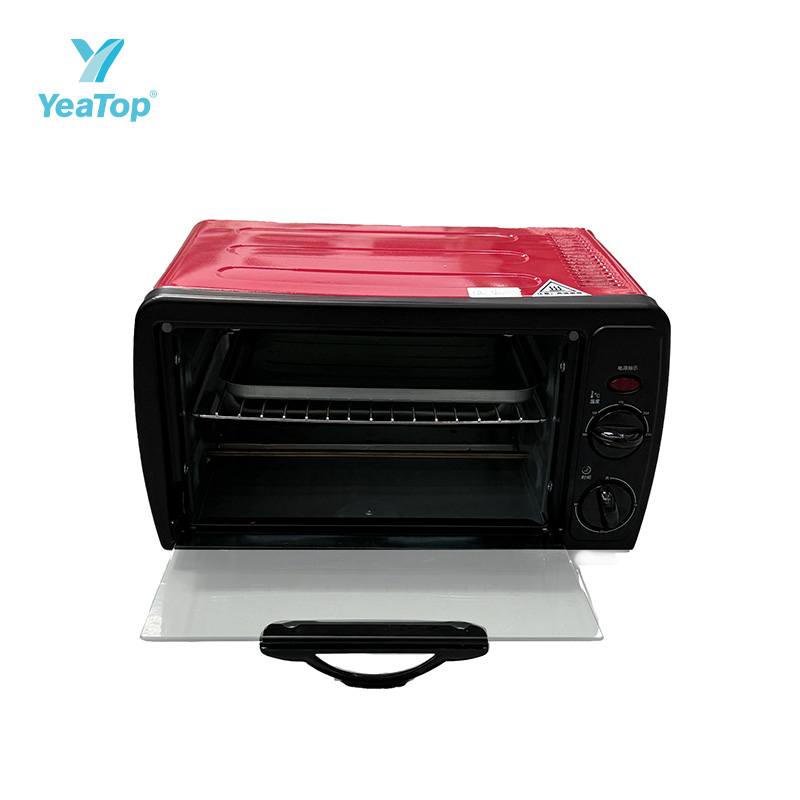
Matching oven cavity size to the actual kitchen layout is a practical way for buyers to optimize project budgets and user satisfaction. Specifying an oversized electric oven for a compact studio kitchen wastes cabinet space, while choosing an undersized unit for family residences or shared hospitality kitchens restricts meal preparation. In global B2B sourcing, 60L and 75L built-in ovens serve as the most versatile options for standard modular cabinetry. A 60L electric oven integrates cleanly into standard kitchen cutouts while providing ample space for everyday family baking, roasting, and tray cooking. When projects involve larger residential units, holiday rental villas, or communal kitchen spaces where users cook larger portions across multiple racks, a 75L electric oven offers expanded interior capacity while maintaining a clean built-in appearance. For compact living spaces, student housing, or office breakrooms where cabinet cutout installation is not required, a 10L table electric oven provides a practical countertop solution for daily heating and small-batch baking.
Buyer Case Study on Long-Term Appliance Value
A clear example of procurement return on investment comes from comparing two different sourcing approaches used by a regional property developer outfitting multi-unit residential kitchens. In the initial project stage, the buyer sourced a basic electric oven model through a general trading company, focusing almost entirely on getting the lowest upfront unit cost. After tenants moved in, the property management team received frequent service requests regarding inconsistent baking temperatures, stiff mechanical knobs, and loose door gaskets that allowed heat to escape. For the next project stage, the buyer worked directly with a specialized appliance manufacturer to specify 60L and 75L electric oven models equipped with fan-forced convection, stable thermostats, black tempered glass doors, and clear touch control LED displays. Throughout subsequent operations, after-sales repair requests dropped substantially, and residents reported much smoother daily cooking experiences. By eliminating recurring repair visits and replacement part shipments, the developer achieved a noticeably better financial return across the second rollout despite a modest adjustment in initial unit specification.
Regional Voltage Adaptation and Pre-Shipment Inspection
International appliance procurement requires careful attention to regional electrical standards before production begins. An electric oven built for North American distribution must be engineered for 110V power systems with matching regional plug types, while European, Middle Eastern, and Asian markets generally require 220V configurations and corresponding compliance standards. Addressing voltage requirements, wiring assemblies, and plug formats during the initial engineering and sample stage ensures that every electric oven operates safely under local grid conditions. Beyond electrical design, consistent procurement return on investment relies on strict quality control on the factory floor. Before any bulk order leaves the production facility, each electric oven should undergo pre-shipment testing for temperature accuracy, cavity heat distribution, and electrical safety. Confirming that the manufacturer performs these functional inspections before container loading helps importers and project contractors prevent customs delays, field defects, and costly batch rework.
Multifunction Cooking Modes and Cabinet Integration
Today's end users value kitchen appliances that handle multiple cooking tasks without taking up extra counter space. Procurement managers can increase the appeal of their appliance packages by selecting a multifunction electric oven that brings several cooking methods together in one unit. Combining conventional baking, grill heating, fan-forced convection, and air fry functions inside a single electric oven allows users to roast meats, bake pastries, and crisp foods without needing separate countertop appliances. For projects that require even broader cooking versatility in a coordinated layout, pairing a primary electric oven with combi steam and microwave options creates a complete built-in cooking station. Furthermore, customizing control panel languages, local cooking presets, and matching trim kits allows each electric oven to fit smoothly into different regional kitchen designs, supporting both modern black tempered glass aesthetics and coordinated cabinet finishes.
Building Supply Chain Value Through Direct OEM Partnerships
Long-term procurement return on investment is closely tied to the manufacturing capability and flexibility of the supplier. Partnering directly with an established factory streamlines communication, reduces intermediary markups, and keeps production schedules predictable. With over eleven years of specialized manufacturing experience and product exports reaching more than eighty countries, Jiaye focuses on building practical reliability into every electric oven produced on its lines. For appliance brands, wholesalers, and engineering contractors, Jiaye offers comprehensive OEM and ODM services that cover voltage adaptation, cavity size selection, control panel interfaces, baking programs, custom branding, and export packaging. Buyers can review product samples and refine technical drawings prior to mass production, while flexible minimum order quantities make it easier to introduce customized kitchen appliances to specific regional markets without excessive inventory pressure. Working with a responsive manufacturing partner like Jiaye helps B2B buyers turn kitchen equipment sourcing into a stable, repeatable business advantage.
Frequently Asked Questions About Kitchen Oven Procurement
Question: How should buyers choose between a 60L and a 75L built-in electric oven for their market?
Answer: The decision depends on target household size and typical cooking habits. A 60L electric oven fits standard modular kitchen cabinets and easily handles daily family baking and roasting. A 75L electric oven offers additional interior volume for larger families or residential projects where users frequently roast large cuts of meat or bake on multiple trays at once, while still fitting into standard cabinet widths.
Question: What technical features help an electric oven bake food evenly?
Answer: Even baking is achieved through a combination of balanced airflow, fan-forced convection, accurate temperature sensors, stable thermostats, and effective door sealing. When hot air circulates smoothly across the racks and the door gasket prevents heat loss, food cooks uniformly from edge to center.
Question: Can an electric oven be customized for different regional voltages and user interfaces?
Answer: Yes, through OEM and ODM customization, the factory can configure the electric oven for 110V North American systems or 220V European and Asian grids, match local plug types, adjust control panel languages, and program regional cooking presets to suit local user habits.
Question: What quality checks are performed on an electric oven before shipment?
Answer: Prior to packing and loading, units undergo pre-shipment testing focused on temperature accuracy, even heat distribution inside the cavity, and electrical safety compliance. These factory inspections verify that each electric oven functions properly before reaching the buyer's warehouse.
Question: How do flexible MOQs support importers and private-label appliance brands?
Answer: Flexible minimum order quantities allow distributors and brand owners to test new electric oven models, launch localized configurations, or supply medium-scale construction projects without tying up large amounts of capital in excess stock.
Table of Contents
- Real Cost Drivers Behind Bulk Kitchen Equipment Sourcing
- Thermal Stability and Airflow Engineering in Daily Use
- Selecting Practical Cavity Capacities for Diverse Projects
- Buyer Case Study on Long-Term Appliance Value
- Regional Voltage Adaptation and Pre-Shipment Inspection
- Multifunction Cooking Modes and Cabinet Integration
- Building Supply Chain Value Through Direct OEM Partnerships
- Frequently Asked Questions About Kitchen Oven Procurement