
 EN
EN

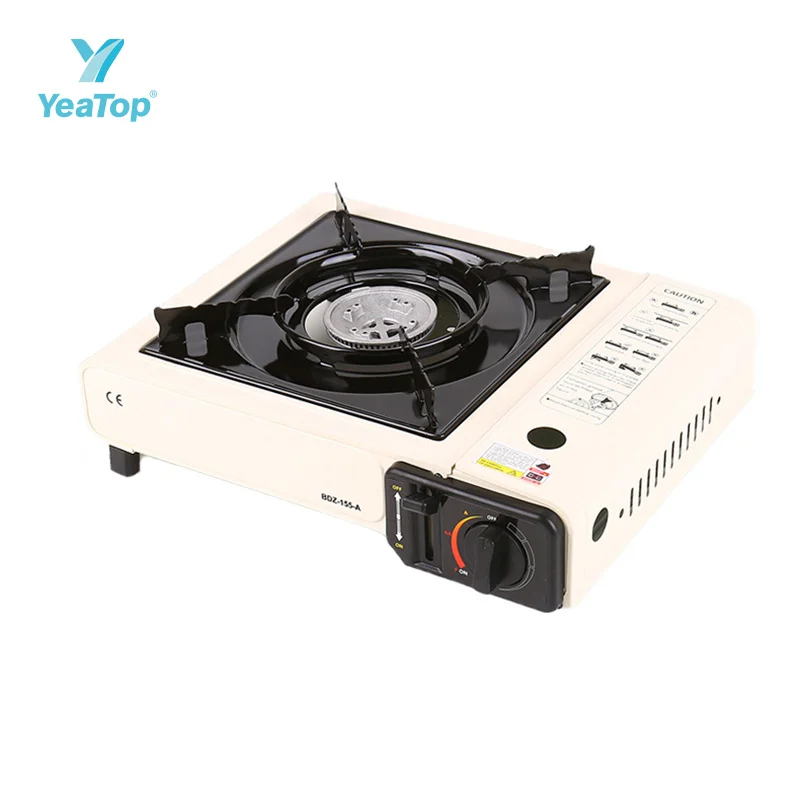
Navigating Global Regulatory Requirements for Gas Appliances
When global importers, regional distributors, and engineering contractors evaluate commercial or residential kitchen hardware, navigating international regulatory compliance and product safety standards represents an essential step in preventing costly supply chain delays or customs rejections. A high-performance
North American Safety Standards and Certification Benchmarks
In the North American commercial and residential markets, electrical safety, structural durability, and fuel containment are governed by strict ANSI and UL standards enforced by recognized testing organizations such as CSA and Intertek ETL. Before any gas cooktop can be legitimately distributed in the United States or Canada, the appliance must undergo rigorous thermal stress testing, flame failure response verification, and electrical insulation diagnostics. These technical evaluations ensure that automated pulse ignition modules operate safely under continuous high-temperature exposure and that internal gas distribution manifolds maintain absolute leak-proof integrity under fluctuating line pressures. Compliance with these stringent standards gives B2B buyers complete confidence when introducing new
European CE Marking and Gas Appliance Regulation Compliance
For brand owners expanding into European Union member states, securing CE marking and complying with the Gas Appliance Regulation (GAR 2016/426) is an absolute legal prerequisite. A compliant gas cooktop destined for European households or commercial food service establishments must incorporate flame failure safety devices (FFD) on every single burner, automatically shutting off fuel flow if the flame accidentally extinguishes due to drafts or boil-overs. Furthermore, every gas cooktop unit must satisfy strict energy efficiency parameters and European RoHS/REACH environmental material directives, ensuring that internal metal components and wiring harnesses remain entirely free from harmful heavy metals or hazardous chemical substances. Navigating these multi-faceted European directives guarantees smooth customs clearance at major European ports of entry. Meeting these strict European Union mandates not only unlocks access to a massive market of over 450 million consumers but also reinforces a brand's commitment to user safety and environmental sustainability.
Regional Certification Standards Across Global Target Markets
Importing commercial or residential kitchen equipment into Asia-Pacific, Latin American, and Middle Eastern jurisdictions requires compliance with localized safety marks tailored to regional fuel compositions and electrical grid frequencies. For instance, exporting a gas cooktop to Australia requires AGA (Australian Gas Association) certification, while selling in China demands CCC (China Compulsory Certification). Similarly, markets across South America and the Gulf Cooperation Council (GCC) region enforce strict local standards covering liquefied petroleum gas (LPG) and natural gas (NG) pressure variations. Partnering with a skilled manufacturer experienced in multi-region certification protocols allows global buyers to streamline regulatory approvals across diverse target markets simultaneously without redesigning core
Comprehensive Factory Testing Protocols and Quality Benchmarks
Behind every safety certification mark lies a comprehensive regime of laboratory testing protocols designed to evaluate mechanical stability, flame safety, and emission levels under extreme operating conditions. Certified testing facilities subject each gas cooktop prototype to high-pressure gas tightness checks, burner combustion efficiency measurements, carbon monoxide emission analysis, and thermal degradation evaluations of tempered glass or stainless steel surfaces. Certified gas cooktop units must demonstrate exceptional structural integrity under continuous maximum thermal output without warping, discoloring, or releasing toxic combustion byproducts. Choosing appliances that have successfully passed these exhaustive laboratory benchmarks protects end-users from potential operational hazards while drastically minimizing post-sale warranty claims for distributors. Advanced laboratory simulations also assess thermal shock resistance for tempered glass gas cooktop surfaces, verifying that sudden cold spills during high-heat cooking will not cause structural cracking or glass shattering.
Commercial Advantages of Sourcing Fully Certified Appliances
Sourcing fully certified appliances directly impacts commercial success by reducing import tariffs, mitigating product liability risks, and accelerating market entry timelines. When a
Reliable Manufacturing Expertise for Global Regulatory Success
Meeting complex international certification standards requires a trusted manufacturing partner equipped with advanced technical capabilities, rigorous quality control systems, and extensive export experience. By leveraging precision automated metal stamping, computerized gas leak testing lines, and comprehensive
Table of Contents
- Navigating Global Regulatory Requirements for Gas Appliances
- North American Safety Standards and Certification Benchmarks
- European CE Marking and Gas Appliance Regulation Compliance
- Regional Certification Standards Across Global Target Markets
- Comprehensive Factory Testing Protocols and Quality Benchmarks
- Commercial Advantages of Sourcing Fully Certified Appliances
- Reliable Manufacturing Expertise for Global Regulatory Success