
 EN
EN

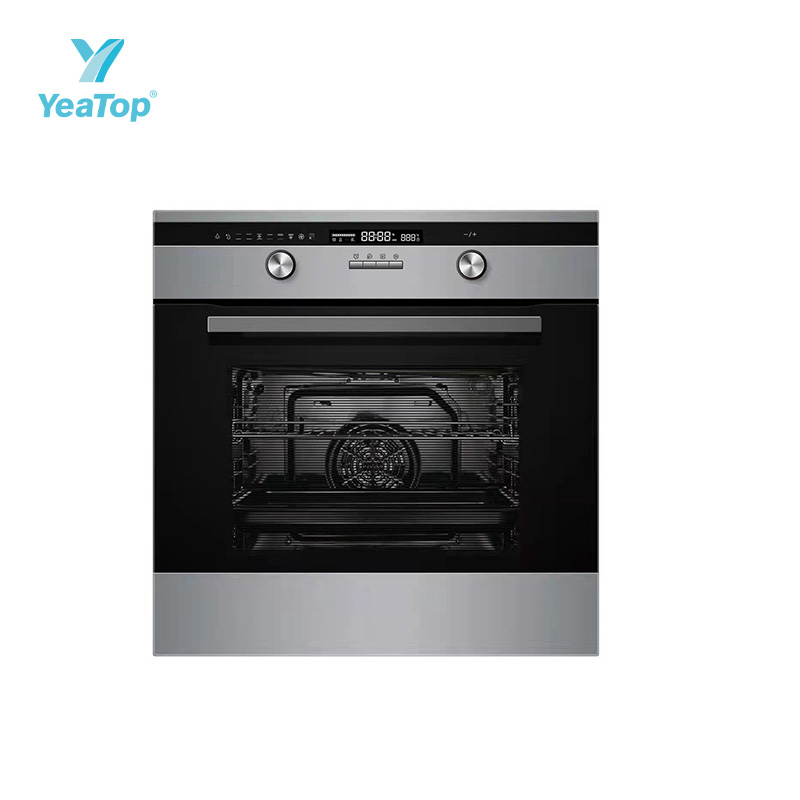
Sourcing Dilemma: An International Buyer's Search for the Right Built In Oven Manufacturer
As an experienced procurement director sourcing premium kitchen appliances for competitive overseas markets, selecting the right manufacturing partner for a built in oven is one of the most critical decisions in our entire product roadmap. Modern culinary consumers demand sleek aesthetic silhouettes, intuitive digital interfaces, precise thermal management, and uncompromising electrical safety. When our retail brand decided to expand its cooking appliance portfolio, we evaluated dozens of potential suppliers across Asia. We needed an experienced OEM partner capable of transforming blueprint concepts into market-ready cooking appliances without cutting manufacturing corners or compromising structural durability. That exhaustive search led us to Zhongshan Jiaye Electrical Appliances Tech Co., Ltd., an established manufacturer with extensive export infrastructure, advanced fabrication facilities, and dedicated engineering capabilities.
Selecting a manufacturing partner for a built in oven requires auditing far more than just unit pricing. A modern built in oven represents an intricate harmony of thermal thermodynamics, structural metal stamping, electronic control boards, and advanced thermal insulation. During our preliminary factory inspection at Jiaye, we observed an integrated operational framework spanning raw sheet metal processing to automated final testing. While standard industry suppliers often rely on fragmented third-party stamping and rigid catalog offerings, Jiaye provides complete bespoke industrial design, custom cavity engineering, and strict compliance with international benchmarks. Their mature engineering capability across premium built in oven solutions immediately reassured us that our brand vision was in safe hands.
Stage 1: R&D, Styling Blueprint, and Specification Customization for the Built In Oven
Our collaborative journey began inside the research and development department. Every successful built in oven begins with a clear blueprint designed to satisfy specific regional cooking behaviors, culinary preferences, and electrical voltage standards. For our target market, we required a family-oriented built in oven compatible with standard kitchen cabinet dimensions, featuring true convection fan capabilities, responsive digital touch controls, and a modernstainless steel and black glass aesthetic. The engineering team at Jiaye reviewed our concept renderings, suggesting structural modifications that improved internal air circulation while streamlining mass assembly. Their industrial designers converted these ideas into detailed digital renderings and ergonomic handle mockups to verify tactile comfort before advancing to production tooling.
During this stage, technical specifications for the built in oven are locked into comprehensive computer-aided engineering files. Engineers utilize computational fluid dynamics simulations to map internal heat flow patterns and convection fan air velocities, guaranteeing uniform temperature distribution and eliminating localized thermal hotspots. Simultaneously, electrical engineers program the custom printed circuit boards and arrange highly sensitive temperature sensors for responsive, real-time heat tracking across multiple heating modes. The total power ratings are carefully balanced to local electrical grid limits to achieve rapid preheating and balanced energy efficiency. This collaborative prototyping phase concludes with the fabrication of functional working samples for rigorous laboratory baking trials, ensuring that every built in oven meets strict culinary benchmarks before metal tooling begins.
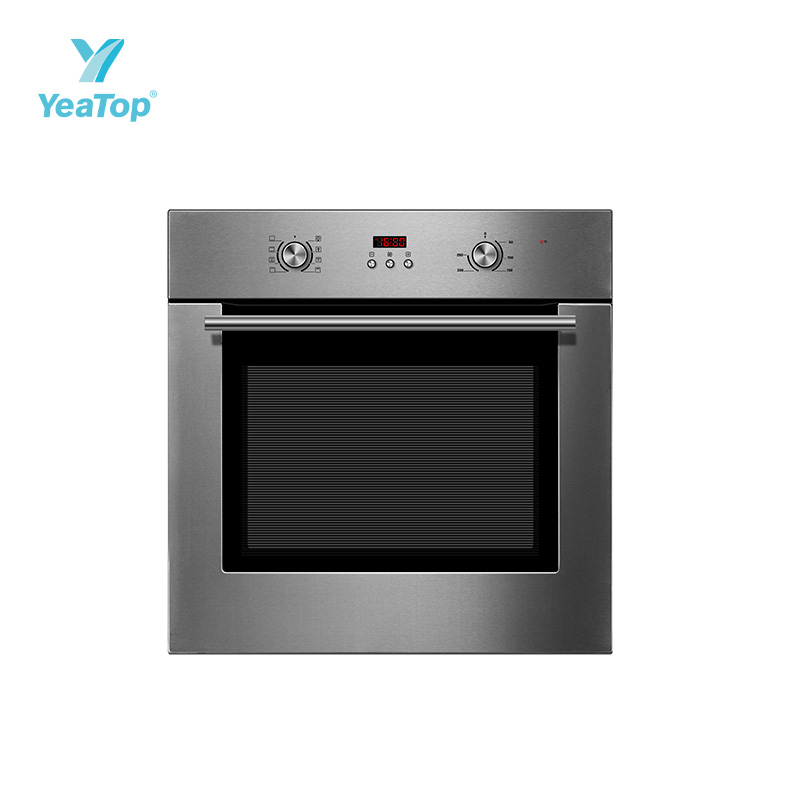
Stage 2: Tooling, Metal Stamping, and Cavity Enameling for the Built In Oven
Once our prototype baking tests were approved, mass production commenced with the fabrication of high-grade tooling and metal components. A built in oven requires remarkable structural rigidity to fit squarely inside kitchen cabinetry without warping over years of intense thermal cycling. Jiaye utilizes automated sheet metal stamping presses that shape cold-rolled steel and stainless steel with microscopic precision. Heavy-duty hydraulic presses maintain tight mechanical tolerances that assure a seamless fit within standard cabinetry cutouts. Robotic spot welding and advanced clinching form an incredibly robust chassis skeleton that easily withstands internal mechanical stresses during long-term operation.
The inner cavity of the built in oven represents the heart of cooking durability. After automated stamping and robotic seam welding, each steel cavity undergoes multi-stage chemical cleaning and surface preparation to eliminate manufacturing residues. Jiaye then applies an advanced electrostatic dry enamel powder coating, followed by continuous high-temperature firing inside an industrial furnace. This continuous thermal process fuses the protective vitreous enamel to the steel walls, producing a glass-smooth, scratch-resistant surface capable of withstanding extreme roasting temperatures and corrosive grease splatters. For our buyers, an easy-to-clean enamel cavity inside every built in oven is a decisive selling feature that minimizes maintenance and drives repeat consumer recommendations.
Stage 3: Modular Assembly, Convection Integration, and Door Engineering for the Built In Oven
On the main assembly floor, the individual subsystems converge into a completed built in oven through an efficient modular production line. Technicians install high-density thermal insulation and heat-reflective foil around the outer cavity, ensuring heat stays trapped within the baking chamber rather than transferring to surrounding cabinetry. Next, the assembly team installs the precision top broiling elements, bottom concealed baking elements, and the signature circular rear convection heating element and fan. This dual-circulation architecture ensures our built in oven delivers true professional baking consistency across multiple rack tiers, accommodating simultaneous multi-dish cooking without cross-flavor contamination.
Equally critical is the door assembly of the built in oven, which directly impacts kitchen user safety and thermal efficiency. Jiaye equips each built in oven with a multi-layered tempered safety glass door featuring low-emissivity coating that reflects infrared heat back into the cavity. This cool-touch door structure channels ambient air between glass layers using a specialized tangential cooling blower, keeping outer glass surfaces safe to touch even during high-heat roasting cycles. Watching the assembly technicians align the heavy-duty damping hinges and smooth-action shelf racks confirmed that every built in oven built here meets top-tier ergonomic and safety benchmarks. Exploring their broad catalog of premium kitchen appliances revealed how this meticulous assembly craftsmanship extends across their entire manufacturing floor.
Stage 4: Comprehensive Testing, Safety Inspections, and Compliance for the Built In Oven
As an international brand buyer, quality verification is where OEM reputations are won or lost. Every single built in oven manufactured by Jiaye must pass a comprehensive testing gauntlet before entering the packaging department. In the electrical testing bay, computerized safety analyzers subject each built in oven to rigorous high-potential dielectric voltage tests, earth continuity checks, and insulation resistance verifications to completely rule out shock hazards. Automated digital sensors calibrate thermostat accuracy across varying temperature profiles, verifying that when a home chef sets a target baking temperature, the internal cavity holds temperature with minimal variance.
Beyond individual end-of-line checks, Jiaye’s quality control technicians pull random units from each batch for continuous endurance and thermal cycling trials. The built in oven undergoes automated pneumatic door fatigue trials exceeding thousands of continuous opening and closing cycles without hinge slack or seal damage. Furthermore, units undergo extended continuous baking runs and thermal imaging audits to confirm that external surfaces remain well within international safety thresholds. Their robust quality framework and alignment with recognized international certifications—including CE, CB, and key regional compliance standards—give global brands complete confidence that their custom built in oven shipment complies with target market import regulations.
Stage 5: Protective Packaging, Palletization, and Global Logistics for the Built In Oven
The manufacturing journey concludes with specialized protective packaging tailored to endure intercontinental sea freight. A heavy built in oven contains tempered glass and precision electronic controls, meaning improper packaging can lead to catastrophic transit damage. Jiaye engineers designed a high-density molded protective foam cradle and reinforced corner protectors that absorb external kinetic shocks. During our audit, we observed standardized multi-angle drop testing to verify that our built in oven emerges flawless upon reaching overseas warehouse destinations.
Customization continues right through to the exterior packaging. Jiaye printed our brand logo, localized multi-language user manuals, regulatory barcodes, and energy label artwork directly on durable multi-ply corrugated shipping cartons. Inside the warehouse, automated palletizing and secure stretch-wrapping protect each built in oven from moisture, humidity, and handling stress during ocean transit. Buyers sourcing OEM kitchen appliance products benefit tremendously from Jiaye's professional container stuffing plans, which maximize volumetric container loading while avoiding box crushing.
Stage 6: Strategic Takeaways: How an OEM Partnership Elevates Your Built In Oven Brand in the Global Market
Reflecting on the entire procurement journey, partnering with an experienced factory like Zhongshan Jiaye Electrical Appliances Tech Co., Ltd. transformed our brand's market expansion from an intimidating operational risk into a runaway commercial success. Sourcing a competitive built in oven is not simply about acquiring raw sheet metal and heating coils; it is about establishing a reliable collaboration with an agile engineering team that understands global consumer expectations. Their scalable production lines allowed us to launch a premium built in oven line on schedule and within budget.
For global brand managers, regional distributors, and appliance importers evaluating new manufacturing partners, having an end-to-end OEM partner is essential. From initial styling and tooling development to specialized cavity enameling, electrical safety validation, and protective sea-freight packing, Jiaye manages every critical link of the built in oven production chain. Direct, single-source manufacturing minimizes supply chain friction, lowers procurement overhead, and virtually eliminates customer warranty claims. Investing in a proven built in oven manufacturing infrastructure safeguards your brand reputation, accelerates your speed to market, and equips your business with high-margin kitchen appliances that win lifelong customer loyalty.
Table of Contents
- Sourcing Dilemma: An International Buyer's Search for the Right Built In Oven Manufacturer
- Stage 1: R&D, Styling Blueprint, and Specification Customization for the Built In Oven
- Stage 2: Tooling, Metal Stamping, and Cavity Enameling for the Built In Oven
- Stage 3: Modular Assembly, Convection Integration, and Door Engineering for the Built In Oven
- Stage 4: Comprehensive Testing, Safety Inspections, and Compliance for the Built In Oven
- Stage 5: Protective Packaging, Palletization, and Global Logistics for the Built In Oven
- Stage 6: Strategic Takeaways: How an OEM Partnership Elevates Your Built In Oven Brand in the Global Market